

Overview
Everything about Africa is unique, unexpected, and in numbers and variety that never fail to surprise. This is especially true of the universe of birds to be found on safari in Kenya and Tanzania. Up in the sky, in the trees, on the lakeshores, and assembled before you on the fields, Africa's dazzling gift of birdlife can be astonishing for first-time visitors. Imagine in a single day spotting a hundred species — from great white pelicans and storks to vibrant pink flamingoes, from vultures and raptor eagles to graceful ibis and herons. While all about, colourful warbling songbirds like starlings, doves, blue turacos, and guineafowl fill the air with their coos, calls, and light melodies.
Africa and especially Kenya and Tanzania are a birdwatcher's paradise. With its varied landscapes of savannahs, grasslands, forests, and wetlands — each habitat supports a colourful range of bird types like bee-eaters, sunbirds, parrots, cranes, and fish eagles. Both countries boast over 1,000 species so the birding on your African safari will be rich, active, and lots of fun.
Kenya is populated with 11% of the world's bird species — close to 1,100 different types of avian life. On some bird-watching journeys, safari-goers have recorded over 500 different species. Besides its geographical diversity, Kenya's many climates also foster a delightful variety of bird types. Adding to that thriving habitat are the many migrant species that arrive between February through October like swallows and waders at the lakes and shorelines.
Tanzania enjoys over 1,100 species of birds, and many types that are native to East Africa. These include migratory waterfowl, birds of prey, and unique, unusual species. Of course, Tanzania is a wildlife wonderland with its thousands of big cats and millions of grazers rounding out your bird-watching experience.
At C.A.T.S, our specialist birding guides are passionate ornithologists who will lead you to the best spots, help you identify species by call and plumage, and ensure your birding adventure is both rewarding and unforgettable.
In High Definition
What to Expect
- Early morning birding walks and game drives in specialised vehicles
- Expert-guided identification sessions with spotting scopes
- Visits to key Important Bird Areas (IBAs) across both countries
- Detailed checklists and species logs for your personal records
- Lake and wetland excursions for flamingos, pelicans, and waterfowl
- Forest walks for canopy species, turacos, and sunbirds
- Comfortable safari vehicles with pop-up roofs for unobstructed viewing
Essential Carry
- Binoculars — we can supply them but having your own means instant access
- Camera with telephoto or zoom lens for bird photography
- Bird identification field guide for East Africa
- Voice recorder for identifying calls and preserving sounds
- Neutral-coloured, breathable clothing that hides safari dust
- Insect repellent — essential for forest and lakeside birding
- Sun hat and quality sunglasses
- Snacks and plenty of water for long bush sessions
Experience Highlights
Best Time to Visit
Bird watching is excellent year-round in Kenya and Tanzania. The dry season from June to October offers the best viewing as birds gather near water sources. The wet seasons (March–May and November–December) are fantastic for spotting migratory species in breeding plumage with vibrant courtship displays. European and Asian migrants arrive between February and October.
Ideal For
- Bird enthusiasts & ornithologists
- Nature photographers
- Families with curious young naturalists
- First-time safari-goers
- Couples seeking unique experiences
- Solo travellers
Destinations
- Masai Mara
- Lake Nakuru
- Lake Naivasha
- Amboseli
- Lake Baringo
- Kakamega Forest
- Arabuko Sokoke
- Aberdare
- Tsavo East
- Serengeti
- Ngorongoro Crater
- Lake Manyara
- Tarangire
Interested in this experience?
Tell us about your dream bird watching safari tours in kenya & tanzania experience and we will craft a personalised itinerary.
National Parks & Reserves
East Africa is one of the world's premier birding regions, with over 1,500 recorded species across diverse ecosystems — from snow-capped mountain forests to alkaline Rift Valley lakes. Below is your expert guide to the finest birding destinations we operate in.
Kenya
Kenya's Rift Valley lakes, highland forests, coastal woodlands, and savanna grasslands together host over 1,100 recorded bird species — the second-highest count in Africa.
Masai Mara National Reserve
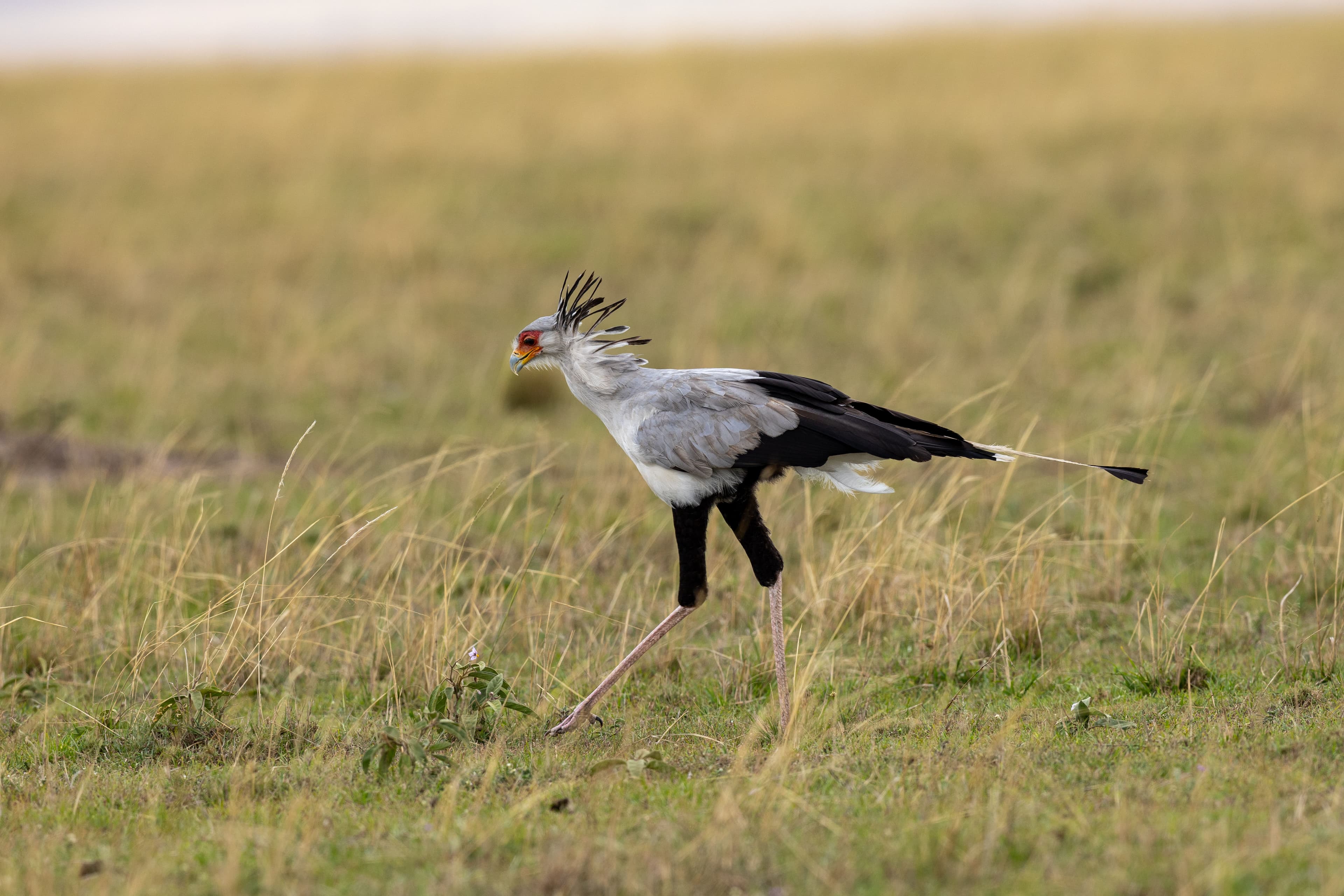
The Mara's rolling grasslands and riverine forests support over 500 bird species. Raptors dominate the open plains — secretary birds stalk through the grass while bateleur eagles soar overhead. The Mara River draws kingfishers, herons, and the iconic African fish eagle, which can be heard calling across the water at dawn. During the Great Migration (July–October), vultures and eagles gather in extraordinary numbers around river crossings, creating some of Africa's most dramatic birding spectacles.
500+ bird species recorded
Key Birds
Lake Nakuru National Park
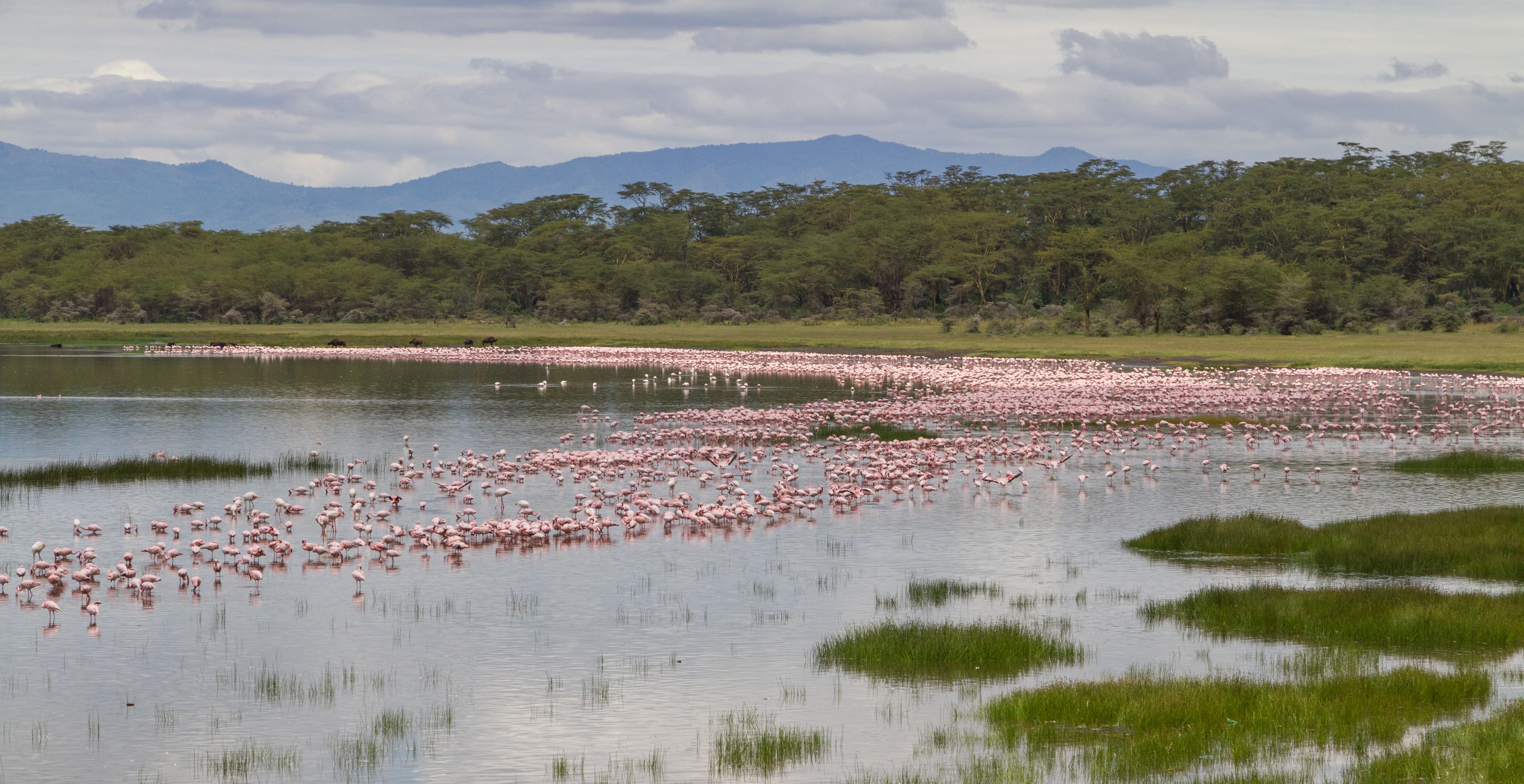
Famous worldwide for its breathtaking flamingo spectacle, Lake Nakuru hosts over 450 bird species across its alkaline waters, acacia woodland, and rocky escarpments. The lake's shores turn pink with millions of lesser and greater flamingos — one of Africa's most iconic sights. Beyond the flamingos, the surrounding euphorbia forest shelters Verreaux's eagle-owl and the endangered Rothschild's giraffe shares the park with pelican colonies and cormorant roosts.
450+ bird species recorded
Key Birds

Lake Naivasha
This freshwater Rift Valley lake is a birding gem with over 400 species. Boat safaris glide beneath fever trees where African fish eagles perch, their iconic call echoing across the water. Crescent Island offers the rare chance to walk on foot among hippos, giraffes, and dozens of bird species with no fences. The papyrus-fringed shores shelter African jacanas, malachite kingfishers, black crakes, and rare grebes. At dusk, the lake transforms as thousands of cormorants return to roost.
400+ bird species recorded
Key Birds

Amboseli National Park
Birding beneath the snow-capped peak of Mount Kilimanjaro makes Amboseli unforgettable. Underground springs from Kilimanjaro feed permanent marshlands that attract over 420 species year-round — grey crowned cranes dance in pairs across green marshes, pelicans and Egyptian geese crowd the shallow pools, and African hawk-eagles patrol the acacia fringes. The open terrain and flat landscape make spotting effortless, making Amboseli ideal for families and first-time birders. The park is also home to the near-endemic Taveta golden weaver.
420+ bird species recorded
Key Birds
Aberdare National Park
The mist-draped highland forests of the Aberdares rise to over 4,000 metres, creating a series of distinct vegetation zones — bamboo thickets, montane rainforest, and alpine moorland — each with its own specialist birds. Nearly 300 species include the endemic Aberdare cisticola, the spectacular crowned eagle hunting monkeys through the canopy, and the golden-winged sunbird feeding on giant lobelias at the tree line. Mountain streams tumble over waterfalls where mountain wagtails bob on mossy rocks and African black ducks shelter in shaded pools.
300 bird species recorded
Key Birds
Tsavo National Park
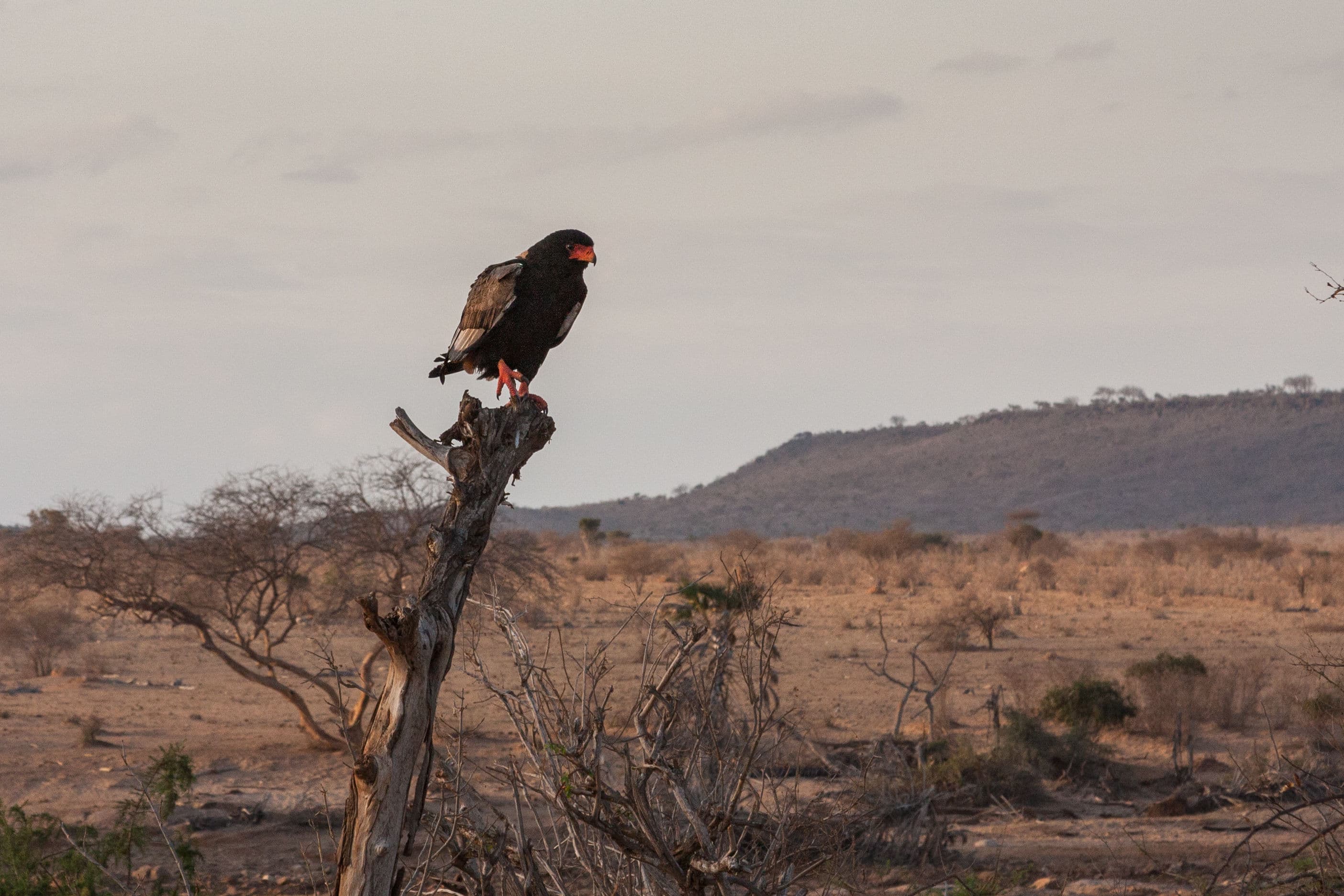
Kenya's largest protected area — split into Tsavo East and Tsavo West — covers over 20,000 square kilometres of raw, untamed wilderness. The contrasts are extraordinary: Tsavo East's flat, red-earth plains host martial eagles, ground hornbills, and golden-breasted starlings, while Tsavo West's volcanic Chyulu Hills, Mzima Springs (crystal-clear underwater hippo viewing), and lava flows support a completely different bird community. The Galana and Athi rivers thread through both parks, their gallery forests alive with Narina trogons, trumpeter hornbills, and African broadbills.
500+ bird species recorded
Key Birds
Samburu National Reserve
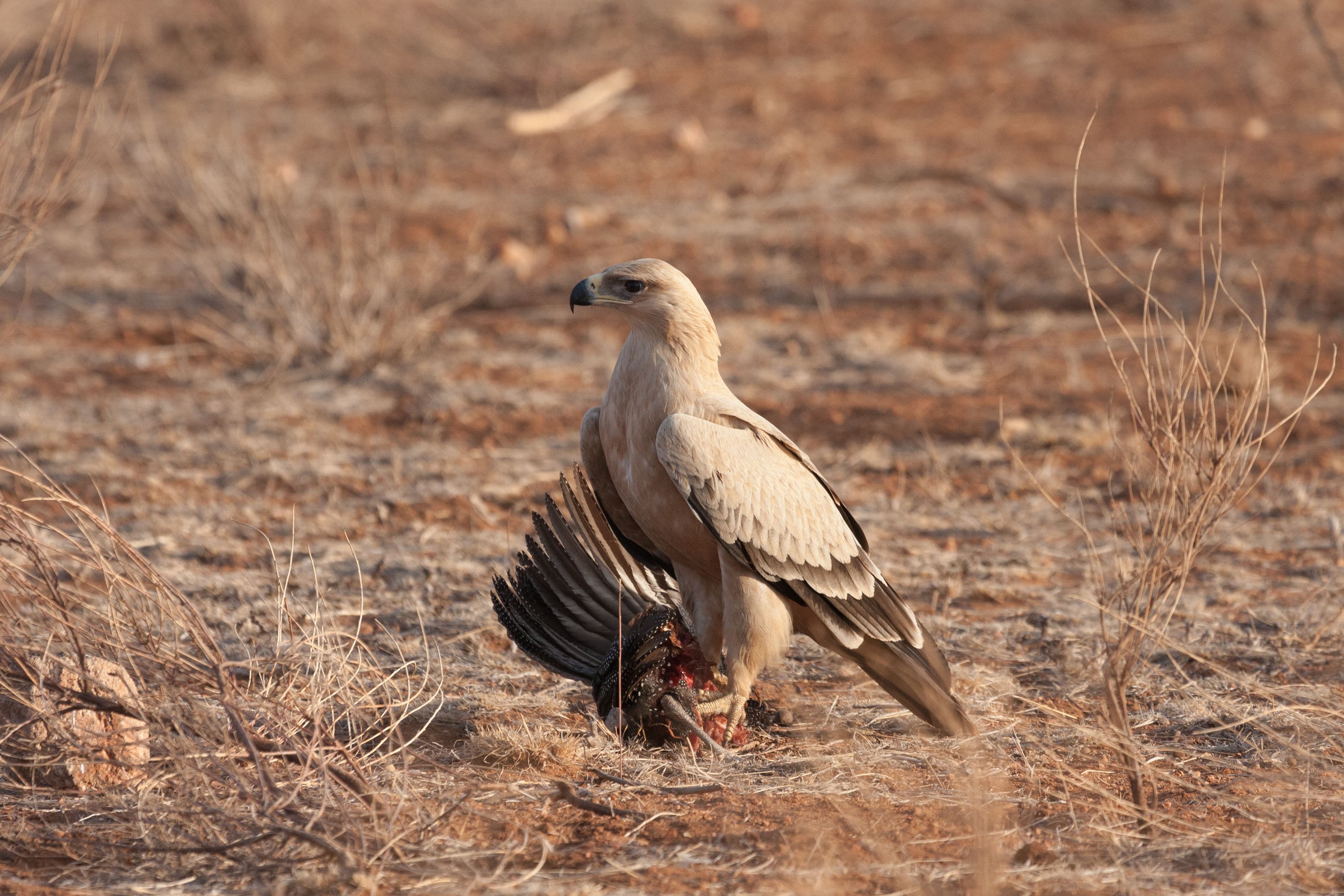
Northern Kenya's premier birding frontier. Samburu's stark beauty — golden scrubland cut by the lifeline of the Ewaso Ng'iro River — supports over 450 species, many found nowhere else in Kenya. The dry-country specials here include the vulturine guineafowl (Africa's most striking gamebird), the Somali ostrich with its blue legs, and the golden-breasted starling. Palm-fringed riverbanks host palm-nut vultures, white-bellied go-away birds, and the tiny pygmy falcon — Africa's smallest raptor — nesting in weaver colonies.
450+ bird species recorded
Key Birds
Arabuko-Sokoke Forest
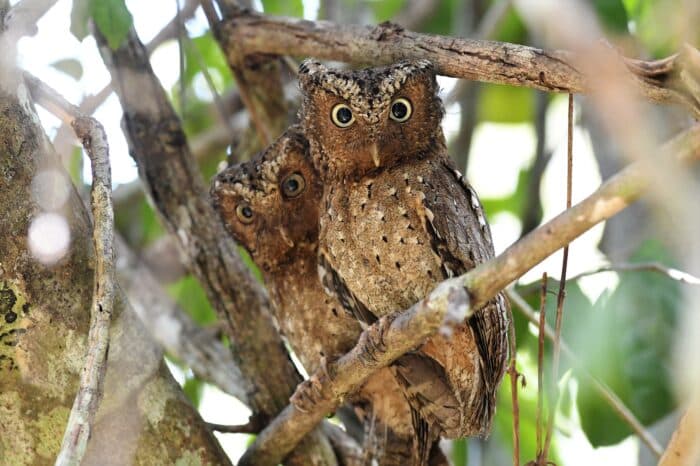
The largest remaining fragment of East African coastal forest — 420 square kilometres of ancient woodland bordering the Indian Ocean near Malindi. This UNESCO Biosphere Reserve shelters six globally threatened bird species and is the single most important site in Kenya for forest bird conservation. The rare Sokoke scops owl — one of Africa's most elusive nocturnal birds — was only described by science in 1965 and is found almost exclusively here. Clarke's weaver, another near-endemic, breeds only in the Brachystegia woodland of Arabuko-Sokoke, making this forest an absolute pilgrimage for serious birders.
270+ bird species recorded
Key Birds
Kakamega Forest
Kenya's last remnant of the great Guineo-Congolian rainforest that once blanketed equatorial Africa — a living fragment of the Congo basin dropped into western Kenya. This 240-square-kilometre tropical paradise is a haven for over 330 bird species including dozens of West and Central African forest birds found nowhere else in East Africa. The great blue turaco glides through the canopy with slow, stately wingbeats, its crimson flight feathers flashing against impossibly green foliage. Black-and-white casqued hornbills crash through the mid-storey, and the elusive blue-headed bee-eater perches quietly along forest streams.
330+ bird species recorded
Key Birds
Lake Baringo
A freshwater gem in the semi-arid northern Rift Valley, Lake Baringo is one of Kenya's premier birding hotspots with over 470 species recorded — more per square kilometre than almost any other site in Africa. The lake's papyrus-fringed islands, rocky cliffs, and acacia scrubland create a mosaic of habitats in a compact area. Hemprich's hornbills — large, striking birds with ivory casques — nest in the surrounding cliffs and are easily seen nowhere else in Kenya. Verreaux's eagles soar above the lake's dramatic escarpment while Goliath herons stalk the shallows alongside hippos.
470+ bird species recorded
Key Birds
Lake Bogoria National Reserve
An otherworldly landscape of boiling geysers, steaming fumaroles, and vivid pink horizons — Lake Bogoria holds up to two million lesser flamingos at peak times, creating arguably the most visually stunning birding spectacle on the planet. This alkaline Rift Valley lake became the flamingos' preferred gathering site after ecological changes at Lake Nakuru. The surrounding thornbush hosts dry-country specialists while the hot springs attract unique invertebrates that in turn draw waders and shorebirds. Greater kudu — rare elsewhere in Kenya — share the scrubland with klipspringer antelope on the eastern escarpment.
135+ bird species recorded
Key Birds
Mida Creek
A tidal inlet on Kenya's north coast near Watamu, Mida Creek is one of East Africa's most important wintering grounds for Palearctic waders — over 60 species of shorebirds gather on its vast mud flats and mangrove-fringed channels. At low tide, the creek becomes a theatre of feeding frenzy: thousands of crab plovers, curlew sandpipers, whimbrels, and terek sandpipers pick through the exposed mudflats while roseate terns dive into the shallows. The site is a Ramsar Wetland of International Importance and provides a rare chance to see crab plovers — extraordinary birds that nest in underground burrows on offshore islands.
100+ bird species recorded
Key Birds
Mount Kenya National Park
Africa's second-highest mountain rises to 5,199 metres through a series of spectacular vegetation zones — each with its own unique bird community. The montane forest belt (2,000–3,000m) supports Hartlaub's turaco, mountain buzzard, and the spectacular crowned eagle. Higher up, the bamboo zone shelters the secretive African green broadbill, while the alpine moorland above 3,500 metres is home to the scarlet-tufted sunbird feeding on giant groundsels and lobelias — one of Africa's most extraordinary birding sights. Over 130 highland species have been recorded in the UNESCO World Heritage Site.
130+ bird species recorded
Key Birds
Tanzania
Tanzania's vast wilderness — from the Serengeti plains to the Eastern Arc Mountains — supports over 1,000 bird species including several endemics found nowhere else on Earth.
Serengeti National Park
The legendary Serengeti — meaning 'endless plains' in Maasai — supports over 500 bird species across 14,750 square kilometres. The Great Migration draws staggering numbers of raptors and scavengers: six vulture species circle the herds while martial eagles and lappet-faced vultures dominate the open plains. The granite kopjes scattered across the grasslands shelter verreaux's eagle owls and rock-nesting species, while the western corridor's riverine forests harbour Fischer's lovebird — endemic to this ecosystem and found nowhere else on Earth.
500+ bird species recorded
Key Birds

Ngorongoro Crater
The world's largest intact volcanic caldera — a UNESCO World Heritage Site — is a 600-metre-deep natural amphitheatre spanning 260 square kilometres. This enclosed paradise contains every major East African habitat within its walls: forest, grassland, swamp, and a soda lake that turns pink with flamingos. Over 500 bird species have been recorded — the forested crater rim supports montane endemics like Schalow's turaco and the rufous-tailed weaver (found only in northern Tanzania), while the crater floor's swamps host crowned cranes and breeding colonies of pelicans.
500+ bird species recorded
Key Birds
Lake Manyara National Park
This compact jewel at the base of the Great Rift Valley escarpment punches well above its weight — experienced birders regularly log 100 species in a single day. The groundwater forest canopy along the park entrance is a cathedral of giant fig and mahogany trees, sheltering silvery-cheeked hornbills, crowned hornbills, and the dazzling Narina trogon. Beyond the forest, the alkaline lake draws thousands of flamingos, while the open floodplains attract breeding colonies of yellow-billed storks and pelicans. The tree-climbing lions Manyara is famous for often perch in the same acacia trees favoured by nesting eagles.
400+ bird species recorded
Key Birds
Tarangire National Park
Ancient baobab trees — some over 1,000 years old — and the life-giving Tarangire River create one of Tanzania's most spectacular birding landscapes. Over 550 species make it one of the highest bird-density parks in East Africa. The endemic ashy starling is found only in the Tanzania-Kenya border zone, while the comical bare-faced go-away bird bounces through acacia canopies. During the dry season (June–October), vast concentrations of elephants and birds gather along the shrinking river, creating extraordinary density of sightings. The swamp areas in the south of the park are home to breeding populations of yellow-collared lovebirds.
550+ bird species recorded
Key Birds
Arusha National Park
Often the first stop on a northern Tanzania safari circuit, Arusha National Park is frequently underestimated. Its remarkable habitat diversity — from the Momella Lakes' alkaline shallows to the montane forests of Mount Meru (Tanzania's second-highest peak at 4,566m) and the Ngurdoto Crater's mini-Ngorongoro — packs over 400 species into a compact area. The Momella Lakes attract flocks of both lesser and greater flamingos, while the dense montane forest harbours bar-tailed trogons, Hartlaub's turacos, and the spectacular Narina trogon. The crater rim offers a walking safari with some of Tanzania's most accessible forest birding.
400+ bird species recorded
Key Birds
Nyerere National Park (Selous)
Formerly the Selous Game Reserve, Nyerere is Africa's largest protected area — larger than Switzerland. Its remote, uncrowded wilderness along the mighty Rufiji River and its vast wetland network supports over 440 species in pristine conditions. This is one of the only places in East Africa to reliably see the rare Pel's fishing owl (Africa's largest owl), which hunts fish by moonlight from overhanging riverbank trees. The African skimmer's elegant low-flight fishing along sandbanks, the jewel-coloured Bohm's bee-eater, and massive breeding colonies of carmine bee-eaters along river cliffs make Nyerere a must-visit for serious birders. Boat safaris offer unique waterbird encounters unavailable anywhere else.
440+ bird species recorded
Key Birds
Frequently Asked Questions
Everything you need to know about planning your bird watching safari tours in kenya & tanzania experience with C.A.T.S.
Which birds can be seen on safari in Kenya and Tanzania?
Kenya and Tanzania together host over 1,100 bird species. Highlights include the lilac-breasted roller, African fish eagle, secretary bird, superb starling, and grey crowned crane. The Rift Valley lakes offer millions of flamingos, while highland forests are home to rare endemics like the Aberdare cisticola and Narina trogon. Both countries offer an incredible variety across habitats — savannah, forest, wetland, and coast.
What are the best parks for bird watching in Kenya?
Top birding destinations in Kenya include the Masai Mara (500+ species), Lake Nakuru (450+ species including flamingos), Lake Baringo (500+ species), Amboseli (420+ species with Kilimanjaro backdrop), Kakamega Forest (300+ species — Kenya's last tropical rainforest), the Aberdares (300 species including endemics), and Arabuko Sokoke on the coast.
What are the best parks for bird watching in Tanzania?
Tanzania's premier birding parks include the Serengeti (500+ species, home to Fischer's lovebird), Ngorongoro Crater (500+ species in a volcanic bowl), Lake Manyara (400 species — up to 100 in a single day), and Tarangire (rich baobab-dotted habitat with starlings, parrots, and the unique bare-faced go-away bird). Lake Victoria is Africa's largest lake with over 300 species.
When is the best time for a bird watching safari?
Bird watching is rewarding year-round. The wet seasons (March–May and November–December) bring migratory species in breeding plumage with vibrant courtship displays. The dry seasons (June–October and January–February) concentrate birds around water sources making them easier to spot with less foliage. European and Asian migrants visit between February and October.
What equipment should I bring for bird watching?
We provide quality binoculars and spotting scopes, but bringing your own pair means instant access. A camera with telephoto lens is ideal for bird photography. Also recommended: a bird identification field guide for East Africa, a voice recorder for identifying calls, neutral-coloured clothing, insect repellent (essential for lakeside and forest birding), sun hat, and plenty of water and snacks.
What vehicles are used for birding safaris?
Our birding safaris use customised 4x4 safari vehicles with pop-up roofs — perfect for standing up and having unobstructed views of birds in flight or perched in treetops. The spacious interiors accommodate your birding equipment, and our vehicles can access remote birding locations off the beaten track.
Can I combine bird watching with a regular wildlife safari?
Absolutely — and we recommend it. The Masai Mara alone offers 500+ bird species alongside the Big Five. Most of our safaris naturally include birding, but our dedicated birding tours are paced differently — slower, more patient, with expert ornithologist guides focused on identification, behaviour, and photography.
Are birding safaris suitable for families with children?
Yes! Bird watching is a wonderful activity for families. Children are often fascinated by the colours and diversity of African birds. Our guides are skilled at engaging young naturalists and making birding fun and educational. We tailor family birding safaris with age-appropriate activities and pacing.
What rare birds might I see in East Africa?
East Africa hosts several rare gems including the Shoebill stork (found in papyrus swamps), the African skimmer, Ruwenzori turaco, East African green broadbill, Taita apalis, Taita thrush, and Taita white-eye (all endemic to the Taita Hills). Our expert guides know exactly where and when to find these elusive species.
Have more questions? We are always here to help.
Experience Pairings
Elevate your African odyssey by pairing the Bird Watching Safari Tours in Kenya & Tanzania with our most requested safari circuits.


