

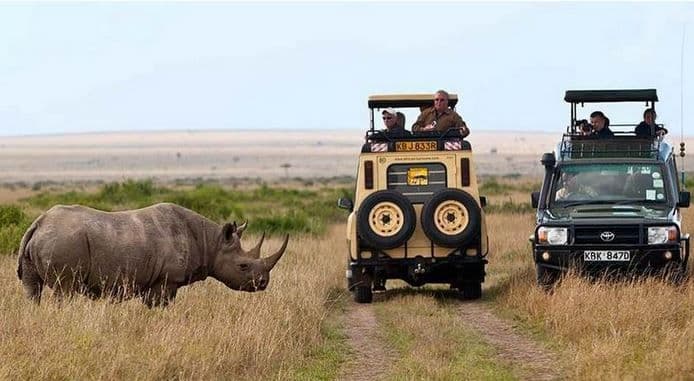
Overview
Journey beyond the game drive and into the living heritage of East Africa. C.A.T.S Cultural Safaris immerse you in centuries-old traditions — from the warrior dances of the Maasai and the rhythmic storytelling of the Samburu to the aromatic spice markets of Zanzibar's Stone Town. Walk through ancient bomas, learn fire-making from elders, barter for hand-beaded jewellery, and share a meal cooked over an open flame under the African sky. These are not tourist performances — they are genuine cultural exchanges arranged through our trusted community partners who ensure every visit benefits the families and villages that welcome you.
East Africa is home to over 120 distinct ethnic communities, each with its own language, customs, music, and art. A C.A.T.S Cultural Safari takes you deep into this extraordinary tapestry of living traditions.
In Kenya's Maasai Mara, crimson-cloaked Maasai warriors welcome you with the adumu jumping ceremony — a awe-inspiring display of strength and grace that has marked rites of passage for centuries. In the arid landscapes of Samburu County, you'll sit with elders beneath acacia trees and hear origin stories passed down through generations, while young warriors demonstrate their legendary tracking skills.
On the Swahili Coast, explore the coral-stone alleyways of Lamu — Africa's oldest living town — where Swahili, Arab, Persian, and Indian cultures have blended for over a thousand years. In Zanzibar's Stone Town, a UNESCO World Heritage Site, spice tours awaken your senses with clove, cardamom, vanilla, and cinnamon fresh from the vine.
Every cultural safari is designed to create meaningful, respectful exchanges. Our trusted community partners ensure that tourism directly supports education, healthcare, and cultural preservation in every village we visit. These are connections that stay with you long after the journey ends.
In High Definition
What to Expect
- Guided by English-speaking cultural hosts from each community
- Respectful and immersive experiences — not tourist performances
- Small group sizes for genuine interactions
- Opportunities to purchase authentic handmade crafts directly from artisans
- Family-friendly activities suitable for children of all ages
- Flexible itineraries that combine cultural visits with wildlife safaris
Experience Highlights
Best Time to Visit
Cultural safaris in Kenya and Tanzania are rewarding year-round. The dry seasons (June–October and January–February) are ideal for combining cultural visits with wildlife game drives. Coastal and Zanzibar cultural tours are best from June to March when weather is warm and dry. Festival seasons add extra vibrancy — plan around the Lamu Festival (November) or Sauti za Busara music festival in Zanzibar (February).
Interested in this experience?
Tell us about your dream cultural safaris in kenya & tanzania experience and we will craft a personalised itinerary.
Cultural Destinations & Communities
Discover the living heritage of East Africa — ancient traditions, vibrant communities, and UNESCO World Heritage Sites that bring the soul of Africa to life. Each destination offers genuine cultural encounters arranged through our trusted community partners.
Kenya
Kenya's 44 ethnic communities each carry distinct traditions — from the warrior ceremonies of the Maasai and Samburu to the ancient Swahili heritage of the coast. These cultural encounters are arranged through our trusted community partners who ensure every visit benefits the families and villages that welcome you.
Maasai Mara — Maasai Cultural Heartland
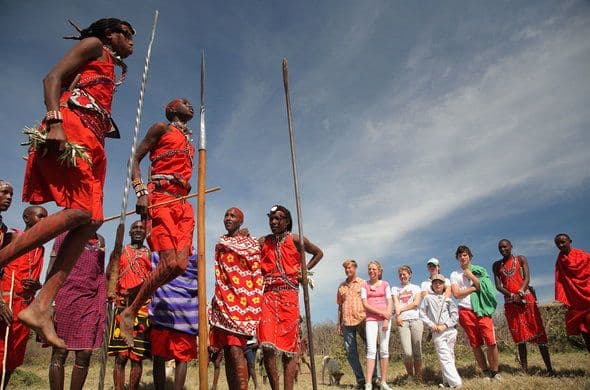
The Maasai Mara is not just Africa's greatest wildlife arena — it is the cultural heartland of the Maasai people, who have lived alongside these herds for centuries. Visit an authentic Maasai boma (village) and witness the adumu — the legendary jumping ceremony that marks a warrior's coming of age. Inside the boma, women in elaborate beadwork welcome you into mud-and-dung homes, share the art of fire-making, and explain how cattle are central to every aspect of Maasai life: currency, ceremony, sustenance, and identity. Many Mara conservancies are now Maasai-owned, meaning your visit directly supports the communities who protect this land.
Maasai
Wildlife
Samburu County — Warriors of the North
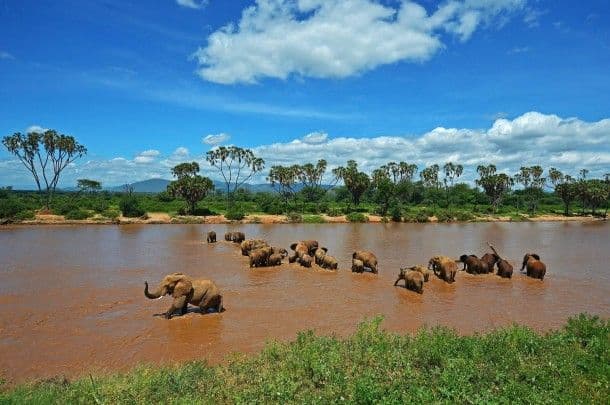
Northern Kenya's Samburu people are closely related to the Maasai but have developed their own distinct traditions shaped by the harsh, beautiful semi-arid landscape. Samburu warriors — resplendent in red cloth, ivory ornaments, and ochre face paint — are legendary trackers and pastoralists. A cultural visit to a Samburu manyatta (village) reveals a society where age-set systems still govern daily life: morans (warriors) protect the cattle, elders settle disputes under acacia trees, and women craft the iconic multi-layered beaded necklaces that signify marital status and clan identity. Evening storytelling sessions with elders under the stars are profound and unforgettable.
Samburu
Wildlife
Lamu Old Town — Living Swahili Heritage
Lamu is the oldest continuously inhabited Swahili settlement in East Africa and a UNESCO World Heritage Site. Founded in the 14th century, its coral-stone buildings, carved wooden doors, and narrow car-free streets have remained virtually unchanged for over 700 years. The town is a living museum of Swahili culture — a fusion of African, Arab, Persian, Indian, and European influences that created one of the world's great maritime civilizations. Dhow boats still sail as they have for millennia, donkeys remain the primary transport, and the call to prayer echoes from 23 mosques. The annual Lamu Cultural Festival (November) features dhow races, donkey races, poetry recitals, and traditional Swahili music.
Swahili
Wildlife
Amboseli — Maasai at the Foot of Kilimanjaro
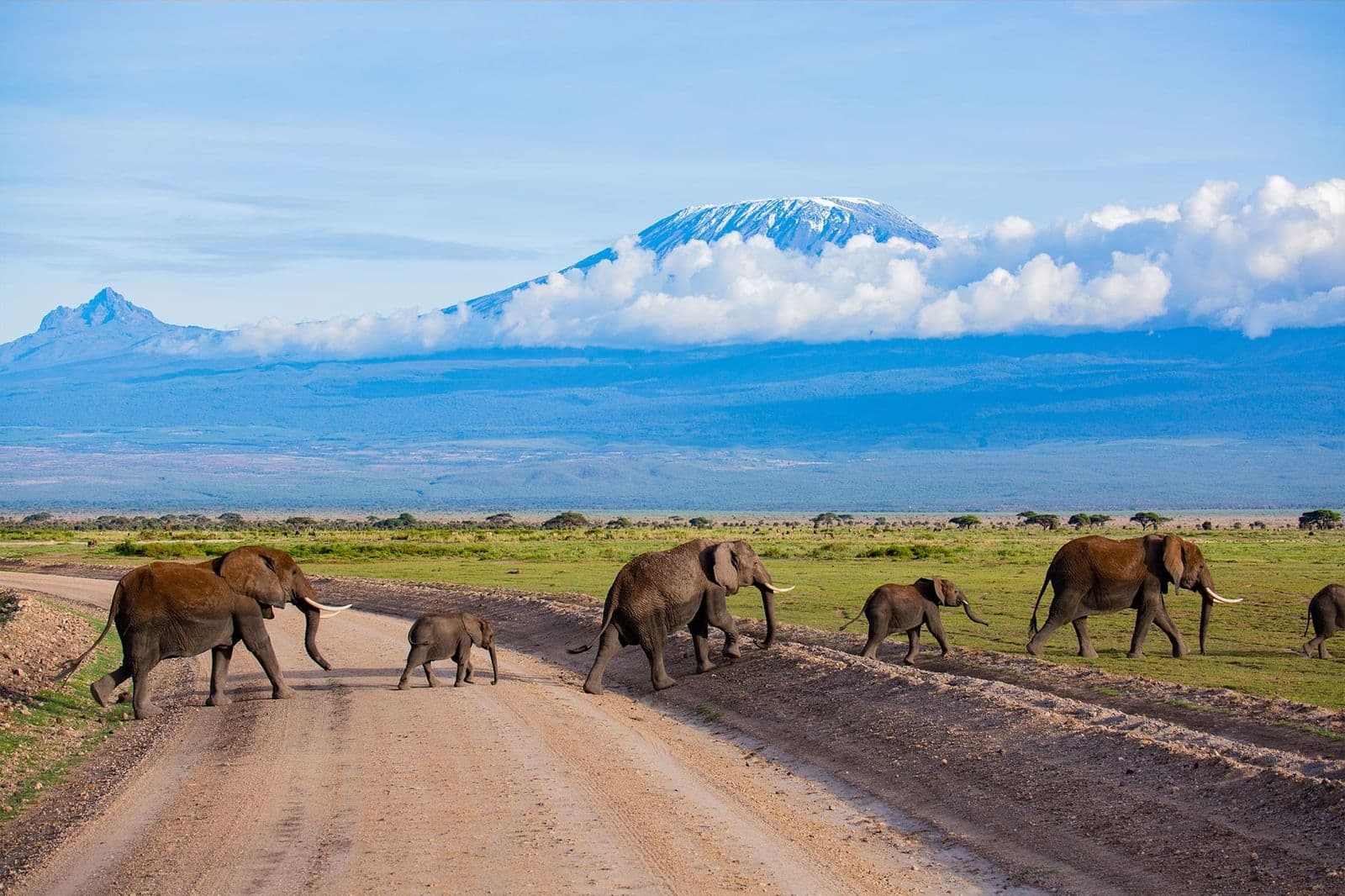
Amboseli's Maasai communities have the most dramatic setting of any cultural encounter in East Africa — their bomas sit in the shadow of Mount Kilimanjaro, Africa's highest peak. Here the Maasai have developed unique adaptations to living alongside elephants, lions, and other wildlife. Cultural visits include learning about the Maasai's evolving relationship with conservation: once lion-hunters to prove warrior status, many communities now participate in lion-guardian programmes where former hunters become protectors. Women's cooperatives sell beadwork, and community elders explain how traditional land management practices have preserved the Amboseli ecosystem for generations.
Maasai
Wildlife
Laikipia Plateau — Ancient Rock Art & Community Conservancies
The vast Laikipia Plateau in central Kenya is home to some of Africa's most innovative community conservancy models and ancient cultural heritage. Rock art sites dating back large numbers of years reveal the earliest pastoralist communities who roamed these highlands. Today, the Pokot, Il Ngwesi, and Maasai communities manage conservancies that have become global models for community-based conservation. Il Ngwesi Lodge — the first community-owned lodge in Kenya — was built and is staffed entirely by local Maasai, with all profits funding schools, healthcare, and wildlife protection. Camel and horseback safaris led by Samburu morans cross landscapes that feel like the edge of the world.
Pokot, Il Ngwesi, Maasai
Wildlife
Mombasa Old Town — Fort Jesus & Swahili Doors
Mombasa's Old Town is a living chronicle of Kenya's coastal history spanning over a thousand years. The Portuguese-built Fort Jesus (1593), now a UNESCO World Heritage Site, tells the story of centuries of conflict between Portuguese, Omani, and British colonial powers over control of the Indian Ocean trade. Beyond the fort, the narrow alleys reveal ornately carved Swahili doors — each one a masterpiece telling the owner's status, trade connections, and religious beliefs through intricate patterns. The Mackinnon Market overflows with turmeric, cardamom, and tropical fruit, while the old harbour still hosts dhow trade to the Persian Gulf. A Swahili cooking class in a local home is the perfect way to taste this fusion of cultures.
Swahili, Mijikenda
Wildlife
Lake Turkana — Cradle of Mankind
The world's largest permanent desert lake — the 'Jade Sea' — sits in Kenya's remote northwest, surrounded by volcanic moonscapes and home to some of humanity's oldest fossils. The Turkana and El Molo people (one of Africa's smallest ethnic groups, with fewer than 1,000 members) live along its shores, fishing from reed boats and maintaining traditions unchanged for millennia. Koobi Fora, on the lake's eastern shore, is where Richard Leakey's team discovered 1.6-million-year-old Homo erectus remains — 'Turkana Boy' — rewriting the story of human evolution. This is expedition-level travel: remote, raw, and profoundly moving. The annual Lake Turkana Cultural Festival brings together 14 ethnic groups for three days of dance, music, and traditional competition.
Turkana, El Molo, Rendille, Gabra
Wildlife
Tanzania
Tanzania's cultural tapestry stretches from the Hadzabe hunter-gatherers of Lake Eyasi — one of the last such societies on Earth — to the UNESCO World Heritage streets of Zanzibar Stone Town, and the cradle of mankind at Olduvai Gorge where our earliest ancestors walked.

Ngorongoro Highlands — Maasai & Datoga Heritage
The Ngorongoro Conservation Area is unique in all of Africa — the only place where Maasai pastoralists live and graze their cattle alongside wild lions, elephants, and buffalo inside a World Heritage Site. The crater rim Maasai bomas offer cultural encounters with a dramatic volcanic backdrop. Beyond the crater, the lesser-known Datoga (or Barabaig) people are semi-nomadic blacksmiths and cattle herders who pre-date the Maasai in this region. A visit to a Datoga homestead reveals their extraordinary brass jewellery-making skills — they forge arrowheads and ornaments from recycled metal using ancient techniques. The contrast between Maasai and Datoga cultures within one landscape is fascinating.
Maasai, Datoga (Barabaig)
Wildlife
Zanzibar Stone Town — Spice Island Heritage
Zanzibar's Stone Town is a UNESCO World Heritage Site and one of the most culturally layered places on Earth. For over a thousand years, it was the centre of the Indian Ocean spice trade — clove, cinnamon, and cardamom flowed out while Persian, Arab, Indian, and European influences flowed in. The result is a mesmerising maze of coral-stone alleyways, brass-studded carved doors (over 560 documented), ornate balconies, and rooftop terraces overlooking the sea. Visit the former slave market (now the Anglican Cathedral), walk the spice plantations to taste fresh vanilla, nutmeg, and lemongrass straight from the vine, and explore the legendary Forodhani Gardens night food market — Zanzibar's open-air kitchen since the 1930s.
Swahili, Shirazi, Arab, Indian
Wildlife
Lake Eyasi — Hadzabe & Datoga Living Traditions
Lake Eyasi, in the rain shadow of the Ngorongoro Highlands, is home to the Hadzabe — one of the last remaining hunter-gatherer societies on Earth. Numbering fewer than 1,500, the Hadzabe live as their ancestors did for over 50,000 years: hunting with handmade bows and arrows, gathering wild berries and tubers, and moving camp with the seasons. A dawn hunting walk with Hadzabe men is one of Africa's most raw and authentic cultural experiences — you'll witness extraordinary tracking skills, see how they use bird calls to locate honey guides, and taste fresh honeycomb from a baobab tree. Nearby, the Datoga tribe forge arrowheads and trade with the Hadzabe, creating one of the oldest trading relationships in human history.
Hadzabe, Datoga
Wildlife
Bagamoyo — Historic Slave Trade Port
Bagamoyo — meaning 'lay down your heart' in Swahili — was East Africa's most important slave and ivory trading port in the 19th century and the launching point for European explorers Burton, Speke, and Stanley. Today this quiet coastal town, a UNESCO World Heritage tentative site, preserves this painful history with dignity: the old slave market, German colonial buildings, and Catholic mission (the oldest in East Africa, founded 1868) create a walking tour through layers of history. The Bagamoyo Arts College — Tanzania's national college of arts — hosts performances of traditional Tanzanian dance, drumming, and theatre. The crumbling coral-stone ruins along the beach evoke the ghosts of a trade that shaped the modern world.
Swahili, Zaramo
Wildlife
Olduvai Gorge — Cradle of Mankind
Olduvai Gorge (Oldupai in Maasai) is one of the most important paleoanthropological sites on Earth — the place where Louis and Mary Leakey discovered the 1.8-million-year-old skull of Homo habilis, fundamentally changing our understanding of human evolution. The gorge cuts 90 metres deep into the Serengeti plains, exposing 2 million years of geological and evolutionary history in its layered walls. The on-site museum displays casts of the original fossils, Acheulean stone tools, and the famous Laetoli footprints — 3.6-million-year-old footprints of our earliest ancestors preserved in volcanic ash. Standing here, looking across the same plains our ancestors walked, is a humbling encounter with the deepest roots of what it means to be human.
Archaeological Heritage