


5-Day Masai Mara Migration Fly-In Safari | Great Wildebeest Crossing
Migration Specialist
The Great Wildebeest Migration is the greatest wildlife spectacle on Earth — over two million wildebeest, zebra, and gazelle surging across the Serengeti-Mara ecosystem in an ancient cycle of survival. This dedicated fly-in safari maximises your time in the Masai Mara during peak migration season, skipping the 5-hour road transfer from Nairobi and giving you four full days to track the herds. Positioned in a private conservancy bordering the reserve, you'll have front-row access to the Mara River crossings — where columns of wildebeest plunge into crocodile-infested waters in scenes of raw, primal drama. Expert migration-specialist guides track herd movements daily to put you in the right place at the right time.
Tour Highlights
Wildlife You'll Encounter
Species commonly sighted on this safari route
Day-by-Day Itinerary
Fly Nairobi to Masai Mara
8:00 AM. Wilson Airport, Nairobi. You board a light aircraft that lifts you over the Great Rift Valley — the vast geological scar splitting East Africa, its escarpment falling away dramatically beneath the wing. Lake Naivasha glints far below, its shores dotted with hippos. Then the aircraft crosses the Loita Plains and descends toward the Masai Mara, and the first thing you see from the air takes your breath away: the plains below are MOVING. Thousands — tens of thousands — of wildebeest flow across the golden grassland like a dark river, their columns stretching to the horizon.
You land at a Mara airstrip and your migration-specialist guide greets you with the day's intelligence: where the herds are concentrating, which river crossing points are active, and where the predators are positioned. This is not a generic game drive — it's a strategic operation refined over years of tracking migration patterns.
Check into your camp in a private conservancy bordering the Mara — this means exclusive traversing rights, off-road driving, night drives, and walking safaris unavailable inside the national reserve. After lunch watching wildebeest stream past your tent, the afternoon game drive heads directly for the migration front. Your guide navigates through columns of wildebeest so dense that the vehicle is surrounded — the sound of their grunting, the smell of the herd, the dust rising from a million hooves. Zebras march alongside in disciplined formations, their stripes creating optical illusions in the afternoon light. A cheetah sits on a termite mound, scanning the herds for a vulnerable calf — the migration is a feast for predators, and every big cat in the Mara knows it.
Mara River Crossing Watch
5:00 AM. Optional hot air balloon safari (additional cost) — rising silently over the Mara at dawn, floating above the migration herds as the sun breaks the horizon. From 500 feet, the scale of the migration is staggering: a carpet of animals stretching to the Serengeti border and beyond. Land for a champagne bush breakfast between zebra herds.
Or choose the dawn game drive, which today focuses on the Mara River — the migration's most dangerous obstacle. Your guide positions you at a known crossing point by 7:00 AM. Across the river, vast herds of wildebeest mass on the far bank, their numbers building, their agitation growing. They jostle, push, hesitate — then one brave individual leaps, and the crossing begins. It's instant chaos: animals pour over the bank in a cascade of hooves and spray, plunging into the brown water where four-metre Nile crocodiles lie in wait. The sound is overwhelming — splashing, bellowing, the crack of bodies hitting water. Most make it. Some don't. It's nature at its most raw, honest, and unforgettable.
Your guide moves between multiple crossing points throughout the morning — some crossings last minutes, others hours. Between crossings, the riverine forest yields its own treasures: a leopard draped over a sausage tree branch, her spotted coat dappled by filtered sunlight.
Afternoon game drive through the central plains where the post-crossing herds regroup. Lion prides feast on animals that didn't survive the crossing. Hyena clans patrol the edges. Vultures spiral overhead in columns so thick they look like tornadoes. The migration is not just a spectacle — it's an entire ecosystem in motion.

Predator Tracking & Conservation
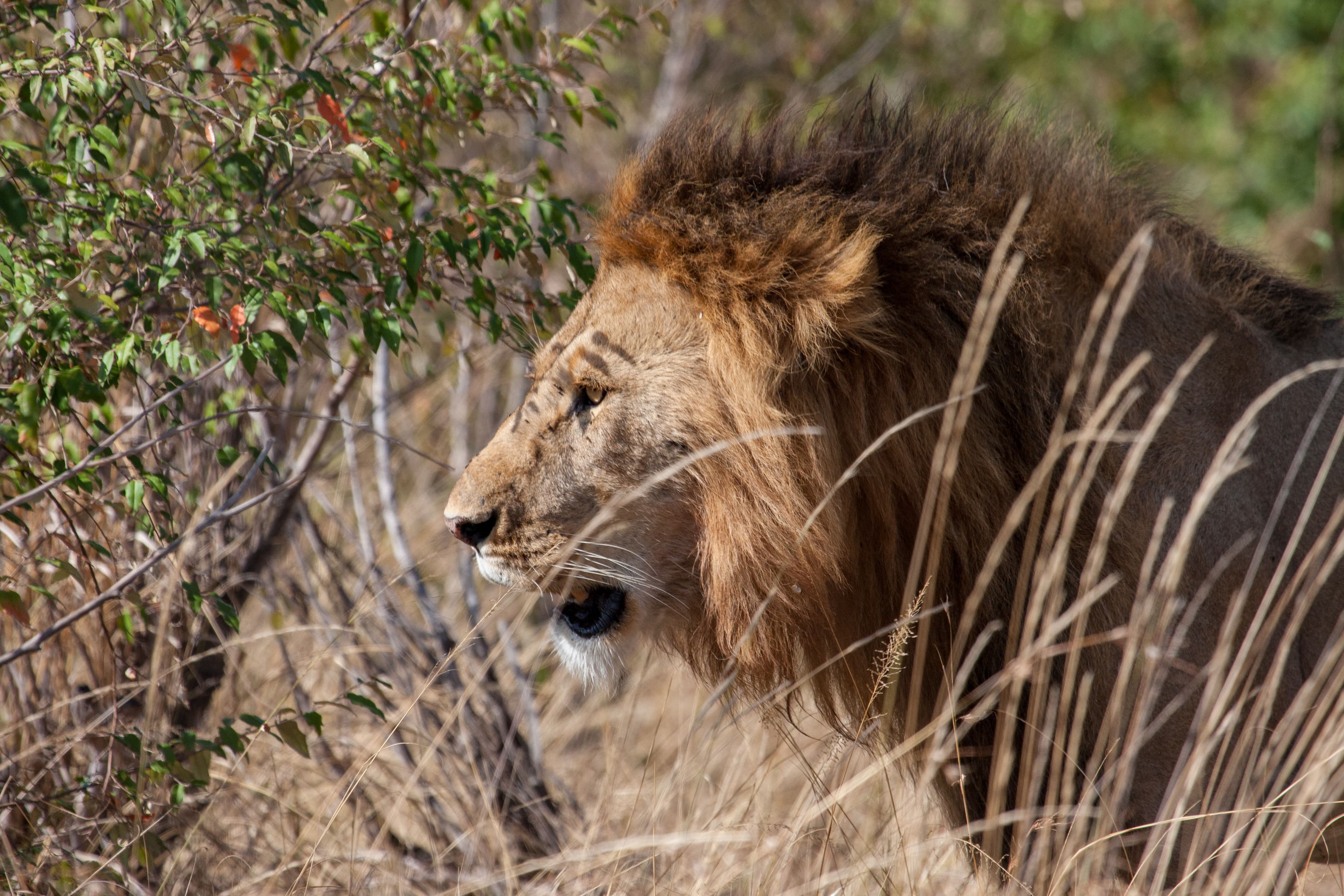
5:30 AM. Today your guide focuses on the Mara's predators — the migration makes this the greatest concentration of big cats on Earth. The morning drive heads for the Mara Triangle, where lion prides have established territories along the migration routes. You find a super-pride of 18 lions resting in the golden grass after a night of feasting — their bellies distended, cubs playing over the remains. Your guide identifies each lion by their whisker pattern and tells their family story: the coalitions, the takeovers, the cubs that survived.
Mid-morning, your guide's radio crackles — a cheetah hunt is in progress two kilometres north. You arrive as a female cheetah accelerates from zero to 100 km/h in three seconds, her body a blur of gold and black, closing on a Thomson's gazelle in a sprint that lasts barely thirty seconds. Success or failure, it's the most explosive moment in African wildlife.
Afternoon in the conservancy where off-road driving lets you approach a leopard mother teaching her cub to stalk — a scene rarely witnessed from the main reserve tracks. You visit a Maasai community within the conservancy to understand the human side of migration: how traditional pastoralists have coexisted with wildebeest herds for centuries, and how conservancy models now provide income from tourism that keeps this land open for wildlife.
Evening features a bush dinner under the stars — your table set on an open plain with hurricane lanterns, the sound of the migration herds grunting in the darkness beyond the candlelight, and a million stars overhead unpolluted by city light.

Full-Day Migration Tracking
5:30 AM. Your guide has received intelligence overnight about a massive herd building up at a new crossing point upstream. You pack a bush picnic lunch and head out for a full-day migration immersion. The drive takes you through terrain most visitors never reach — remote valleys where eland and topi graze alongside the wildebeest columns, and martial eagles soar on the thermals above the escarpment.
You position at the crossing point by 8:00 AM. Today's crossing is the largest yet — an estimated 50,000 animals funnelling toward a narrow ford where the river runs fast and deep. The tension builds for over an hour before the first animals commit. When they do, the crossing lasts three hours — wave after wave of wildebeest and zebra throwing themselves into the current. Crocodiles strike. Hippos bellow. The far bank becomes a churning mass of animals scrambling up the muddy slope. You photograph scenes that National Geographic crews spend months waiting for.
Bush lunch on the plains among the herds — your guide finds a flat-topped acacia for shade and spreads a proper sit-down meal while zebras graze metres from your table. The afternoon drive explores the Mara's lesser-visited northern sector, where African wild dogs are occasionally spotted and the grasslands roll unbroken to the Tanzanian border.
Return to camp for your final Mara sundowner — watching the sun set over the migration herds from a ridge that feels like the edge of the world.
Final Dawn Drive & Return Flight to Nairobi
5:30 AM. Your last Mara dawn. The light is soft gold, the air fresh and cool, and the migration herds are silhouetted against the rising sun. Your guide takes you to a favourite spot — a kopje where a cheetah mother has been raising three cubs. If they're there, the scene is perfect: the mother grooming her cubs on the warm rock, the migration herds flowing past below, the escarpment catching the first light.
A final sweep through the central plains yields a parade of Mara residents: a tower of giraffes crossing the track in their slow-motion way, a journey of hippos returning to the river after a night of grazing, and a pair of secretary birds performing their elaborate courtship dance in the dewy grass.
Return to camp for breakfast, pack, and transfer to the airstrip. The flight back to Nairobi lifts you over the Mara one last time — from the air, the full scale of the migration is visible: dark rivers of animals flowing across a golden sea of grass. It's a sight that has played out for millions of years, and you've just been part of it. Wilson Airport by midday.
Booking Information
- All prices are per person sharing in a double/twin room
- Single room supplement available on request
- Children under 12 receive discounted rates
- Custom itineraries available — contact us for a personalised quote
- Prices valid for 2025/2026 season — subject to park fee changes
What's Included
- ✓Return bush flights Nairobi (Wilson Airport) – Masai Mara
- ✓All airstrip transfers in 4x4 safari vehicle
- ✓Migration-specialist English-speaking guide
- ✓Accommodation in private conservancy camp
- ✓Unlimited game drives including off-road tracking
- ✓Night game drive in conservancy
- ✓Bush breakfast and bush dinner
- ✓All conservancy and park fees
- ✓All meals on safari
- ✓Sundowner drinks daily
- ✓Bottled drinking water
- ✓Government taxes and levies
What's Not Included
- ✗Hot air balloon safari ($460 per person)
- ✗Premium wines and spirits
- ✗Items of a personal nature
- ✗Tips and gratuities
- ✗Optional Maasai village visit ($25 per person)
- ✗Optional walking safari with Maasai guide
Safari Season Guide
Best wildlife viewing. Great Migration in the Mara (Jul–Oct). Dry weather, sparse vegetation makes animals easy to spot.
Calving season in the Serengeti. Good birding. Pleasant weather with occasional showers.
Transition to dry season. Fewer crowds, good rates. Early migration movements begin.
Long rains (Apr–May) and short rains (Nov). Lowest prices. Lush landscapes, excellent birding, newborn animals.
Safari Pricing
Rates are per person. Bush flight costs are included in all rates. Rates vary by accommodation tier selected. Single room supplement (SRS) applies per night.
| Group Size | Economy | Comfort | Luxury |
|---|---|---|---|
| 1 Person | $3,100 | $3,410 | $3,720 |
| 2 Persons | $2,150 | $2,365 | $2,580 |
| 3 Persons | $1,900 | $2,090 | $2,280 |
| 4 Persons | $1,780 | $1,958 | $2,136 |
| 5 Persons | $1,700 | $1,870 | $2,040 |
| 6-7 Persons | $1,650 | $1,815 | $1,980 |
| Single Room Supplement | $190 | $209 | $228 |
Prices are in USD per person sharing. Exact rates may vary based on specific accommodation choice and availability at time of booking. Contact us for a personalized quote.
Before or after your safari
Add a Nairobi Day Trip
Have a spare day in Nairobi? Add a private excursion with hotel or JKIA pickup.
Book This Safari
Personalised itinerary, guaranteed departures
Starting from
$2,350
per person sharing
No booking fees — We respond within 2 hours